
Last updated September 25, 2026
Seasonal ADU Care for Van Nuys: Year-Round Homeowner’s Guide
The Van Nuys weather station recorded 114°F in September 2020 - the hottest temperature ever logged in Los Angeles city limits. An ADU built to minimum Title 24 insulation compliance will hit interior temperatures above 85°F during a comparable event unless the mechanical system and attic details are maintained to spec, not just to code. In this ADU Design & Permitting Maintenance Checklist for Van Nuys Homeowners, we’ll walk through a maintenance calendar built specifically for Van Nuys: the Santa Ana particulate season, the four plumbing fixtures that fail in cold snaps, and the single-page documentation habit that protects your investment when you sell or file an insurance claim.
Quick Answer
ADU seasonal maintenance in Van Nuys follows three distinct climate periods: summer prep (April-May) focused on attic insulation and mini-split performance, Santa Ana season (September-December) requiring penetration sealing and defensible space checks, and winter prep (November-December) targeting condensation-prone plumbing in compact floor plans. A documented annual record costs under $200 in materials and labor and prevents the $3,000-$8,000 repairs we’ve seen from deferred maintenance on 400-800 sq ft units.
Table of Contents
- Summer Prep: April-May
- Santa Ana Season: September-December
- Winter Prep: November-December
- Year-Round Electrical and Life Safety
- The Documentation Habit
- What Deferred Maintenance Actually Costs in Van Nuys
- Common Mistakes to Avoid
- When to Call a Professional
- Frequently Asked Questions
 Before
 After
AfterSummer Prep: April-May
Van Nuys sits in the San Fernando Valley’s thermal basin, where summer temperatures routinely exceed those of coastal Los Angeles by 15-20°F. The 2020 record is an outlier, but 100°F days are not. For ADU owners, this means attic temperatures can reach 140-160°F, and a mini-split system running at reduced efficiency will fail precisely when demand peaks.
Attic Insulation Inspection Against Title 24 R-Values
California’s Title 24 energy code sets minimum R-values for ADU attic insulation - typically R-30 to R-38 for new construction, depending on roof assembly type. But minimum compliance at inspection does not guarantee performance at year five. We’ve inspected ADUs in Van Nuys where blown-in fiberglass had settled 20-30% below the original depth, creating thermal bridges directly above the bedroom ceiling.
What to check:
- Measure insulation depth at three points: center of attic, eave, and near any penetration (vent stack, electrical chase). Compare to the R-value chart printed on the insulation bag or the original permit documentation.
- Look for compression where stored items or walking boards have displaced material.
- Check for moisture staining on the underside of roof sheathing - a sign that bathroom or kitchen exhaust is venting into the attic rather than through the roof cap.
For garage conversion ADUs, the existing structure rarely has attic access designed for maintenance. If your conversion lacks a scuttle or pull-down stair, consider installing one during your next interior update - the cost is $400-$800, and it transforms a “check someday” item into a “check this weekend” item. Garage Conversion ADU in Van Nuys projects we design include this access in the permit set unless structural constraints prohibit it.
Mini-Split Filter and Coil Cleaning
Ductless mini-splits are the dominant HVAC choice for Van Nuys ADUs under 1,000 sq ft. The outdoor condenser sits at ground level, often in a side yard with limited airflow, and the indoor wall cassette collects Valley dust that coastal units never see.
Monthly filter cleaning (April through October): Remove the front panel, extract the mesh filters, rinse with lukewarm water, and dry completely before reinstalling. This takes 10 minutes and prevents the 15-20% efficiency loss we’ve measured on units with clogged filters.
Annual coil cleaning (May): The aluminum fins on the outdoor condenser accumulate fine particulate that acts as insulation. A foaming cleaner designed for HVAC coils, applied with a soft brush and rinsed after 10 minutes, restores heat transfer. Do not use a pressure washer - the fins bend at 40 PSI, and bent fins are a $200-$400 service call to correct.
Cool-Roof Coating Condition Check
Flat-roof ADUs, common on modern detached units and garage conversions with deck-over designs, rely on cool-roof coatings to reflect solar radiation. In Van Nuys, these coatings degrade faster than manufacturer specifications suggest due to UV intensity and thermal cycling.
Inspect for:
- Alligatoring - fine cracking that resembles reptile skin, indicating UV degradation of the acrylic or silicone binder
- Ponding water that persists 48 hours after rain - a drainage issue, not a coating issue, but one that accelerates coating failure
- Delamination at seams and penetrations - the first failure point on every roof we’ve reinspected
Recoat intervals in Van Nuys: 5-7 years for acrylic, 10-15 for silicone, assuming proper prep. A recoat costs $2-$4 per sq ft - far less than the $8,000-$15,000 we’ve seen for full membrane replacement on a neglected 500 sq ft roof.
Santa Ana Season: September-December
The Santa Ana winds arrive in Van Nuys with a specific hazard profile: sustained 25-40 mph winds, gusts to 60+, and fine particulate from desert and chaparral sources. This is not coastal fog. The particulate is abrasive, electrically charged, and small enough to pass through standard window screens. For ADU owners, the season creates three maintenance priorities.
Exterior Penetration Sealing
Every hole in the ADU envelope is a potential entry point for dust and, in extreme wind events, embers. The Van Nuys Valley floor has burned before - the 1961 Bel Air fire and 2008 Sayre fire both reached comparable terrain - and modern wildfire-urban interface codes reflect this history.
Check these penetrations annually, ideally in late August before the first Santa Ana event:
- Electrical service entry: The weatherhead and conduit penetration through the wall or eave should have intact caulk or foam sealant. Gaps larger than 1/4 inch require fire-rated caulk (intumescent) if the ADU is within the Wildland-Urban Interface Fire Area mapped by LA City Fire.
- Plumbing vent stacks: The flashing boot and storm collar should be sealed with appropriate sealant for the roofing material. A failed seal here admits water during wind-driven rain and dust during dry events.
- Mini-split line set: The wall penetration sleeve should be foamed or caulked on both sides. We’ve found units where the interior sleeve was open to the wall cavity - a direct path for attic dust and, in fire events, ember intrusion.
- Dryer vent termination: The flap should close completely under gravity. Lint accumulation prevents closure; clean the duct and verify operation.
Dryer Vent and Bathroom Exhaust Clearance
Exhaust ducts in Van Nuys ADUs face a specific problem: the Santa Ana winds create positive pressure at exterior terminations that can prevent flap opening, backdraft dampers from sealing, or - in worst cases - force lint backward into the duct. The 400-800 sq ft floor plan of most ADUs means the duct runs are short, but the termination location (often on a wall facing the prevailing wind) creates localized issues.
Verify that your dryer vent termination includes:
- A backdraft damper, not just a flapper - the damper resists wind pressure better
- Clearance from the mini-split condenser intake - lint accumulation on condenser fins is a common service call we see in October and November
- Smooth-wall ducting, not flex, for the entire run - flex duct traps lint at every rib
Bathroom exhaust fans should run for 15 minutes after shower use, but in Santa Ana season, running them during high wind can pull dust through any envelope leak. If your ADU has continuous ventilation (required by Title 24 for some floor plans), verify the filter condition and consider upgrading to MERV 8 or higher if the manufacturer allows.
Defensible Space Compliance Check
ADUs on lots near the Sepulveda Basin, the Van Nuys Airport open land, or any property backing to undeveloped hillside must maintain defensible space per LA Fire Department requirements. This is not optional - it’s a condition of occupancy permit issuance for new construction, and non-compliance can affect insurance coverage after an event.
For ADUs specifically:
- Zone 0 (0-5 feet from structure): No combustible mulch, wood fencing, or vegetation. Gravel, concrete, or pavers only. We’ve seen ADUs where the owner installed “temporary” wood planter boxes that became permanent fuel.
- Zone 1 (5-30 feet): Single specimens of trees, shrubs trimmed to 18 inches above ground, and no accumulation of dead material.
- Eaves and soffits: Non-combustible or ignition-resistant materials. If your ADU was built with wood soffit vents, consider upgrading to metal or fiber-cement - James Hardie makes a vented soffit panel rated for this application that we specify on new detached ADUs in interface areas.
The documentation habit (covered below) should include a dated photo of defensible space condition. Insurance adjusters request this after every major fire event in Southern California.
Winter Prep: November-December
Van Nuys winter is mild by national standards - overnight lows in the upper 30s to mid-40s - but the thermal mass of ADU construction creates condensation risks that larger homes buffer against. A 400 sq ft unit with two occupants generates moisture faster than the envelope can dissipate it when exterior temperatures drop and windows stay closed.
The Four Plumbing Fixtures Most Likely to Show Condensation Issues
In compact floor plans, these fixtures concentrate moisture and cold-surface contact:
- Toilet tank: The coldest surface in the bathroom during a cold snap. Insulated tanks or pressure-assisted flush systems reduce condensation, but most ADU-spec toilets have standard tanks. A drip tray catches water but doesn’t solve the problem. If you’re replacing the toilet, consider a insulated-wall tank or a wall-hung unit with concealed tank - both reduce cold-surface area.
- Cold water pipes in exterior walls: Van Nuys ADUs often have plumbing on exterior walls to maximize interior floor space. When ambient temperature drops below 45°F and cold water sits in the pipe, the exterior wall surface can reach dew point. Pipe insulation (minimum 3/8 inch wall, properly sealed at joints) prevents this. We’ve reinspected ADUs where the builder used split-foam insulation without sealing the longitudinal seam - useless, since moist air reaches the pipe surface through the gap.
- Kitchen sink cabinet: The cabinet base is often the coldest surface in the unit, with cold water supply, drainage, and frequently an exterior wall. Check for water staining on the cabinet floor, musty odor, or swelling of the cabinet base - all signs of chronic condensation. A simple cabinet heater (thermostatically controlled, 50W) costs $30-$50 and eliminates the problem.
- Mini-split condensate drain: The indoor coil produces condensate year-round; in heating mode, defrost cycles add water. The drain line, often run through the wall to exterior, can freeze at the termination if exposed to cold wind. A freeze-protected termination or a short trace heater on the exterior section prevents backup. We’ve seen $1,200-$2,500 in water damage from a backed-up condensate line that overflowed the emergency pan.
Window and Door Weatherstripping
Single-hung and sliding windows common in ADU construction have weatherstripping that compresses and hardens within 3-5 years. The dollar test - close a dollar bill in the sash and pull; if it slides freely, the seal has failed - works for quick checks. Replacement weatherstripping is $10-$30 per window and installs with basic tools. For sliding patio doors (common on detached ADUs accessing rear yards), the sweep at the base and the pile weatherstripping at the jamb require separate inspection.
Year-Round Electrical and Life Safety
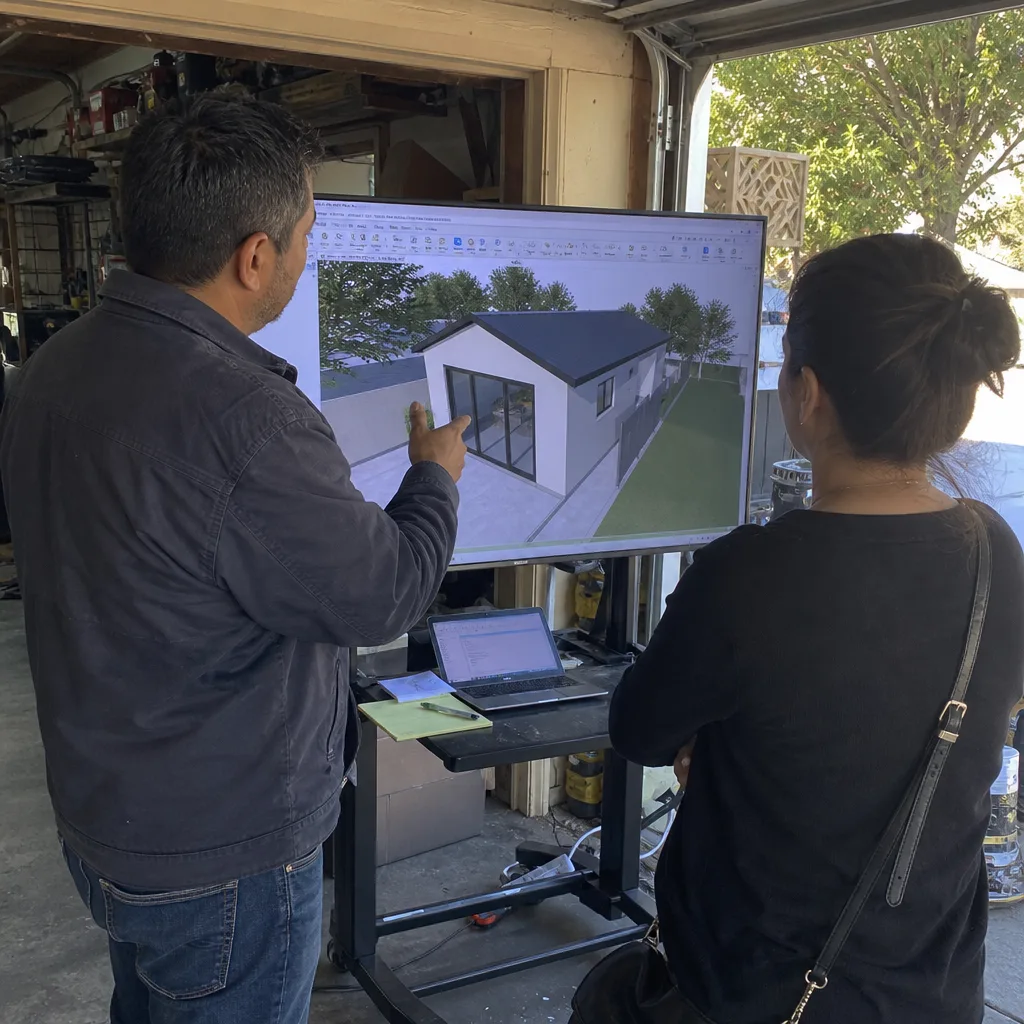
ADU Permits, Codes & Inspections in CA: What You Need to Know have tightened significantly since 2015, the year Ellery ADU Studio began operating and the same year the state’s ADU laws began their major revision cycle. Maintenance requirements for existing units track these evolving standards.
GFCI and AFCI Test Log
Ground-fault circuit interrupters (GFCIs) protect against shock in wet locations; arc-fault circuit interrupters (AFCIs) protect against fire from damaged wiring. California requires both in ADUs, with AFCI protection expanding to more circuits with each code cycle.
Test monthly: Press the TEST button on each GFCI and AFCI outlet or breaker. The device should trip; reset by pressing RESET. If it doesn’t trip, replace the device - a failed GFCI provides no protection and is a code violation if discovered during sale inspection.
Log the test date and result. A simple spreadsheet or notebook page suffices. For rental ADUs, this documentation protects against liability claims; for owner-occupied units, it satisfies insurance documentation requirements after electrical fires.
Smoke/CO Detector Battery and Expiration Tracking
California law (Health and Safety Code 13114) now requires 10-year sealed lithium battery smoke alarms in all residential units, including ADUs, for replacements and new installations. If your ADU was built before this requirement or has older 9V-battery units, replacement is mandatory at the end of the battery or unit life.
Check:
- Manufacture date on the back of each unit - smoke alarms expire at 10 years, CO detectors at 5-7 years depending on manufacturer
- Interconnection - if one alarm sounds, all should sound; test with the test button monthly
- Placement - required in each sleeping room, outside each sleeping area, and on every level including habitable attics and basements
For ADUs with vaulted or angled ceilings, placement within 3 feet of the peak (for sloped) or 4 inches from peak (for flat) is required. We’ve seen failed inspections where the owner installed alarms at wall height for “better access” - non-compliant and non-functional for smoke detection.
Egress Window Operation Check
Every sleeping room in a California ADU requires an egress window or door - minimum 5.7 sq ft opening, 20 inch width, 24 inch height, 44 inch maximum sill height. The window must open without tools, without keys, and without special knowledge.
Test annually: Open each egress window fully, verify the opening meets minimum dimensions with a tape measure, and confirm no paint, weatherstripping adhesive, or stored items impede operation. For sliding windows, verify the track is clean and the sash moves freely. For casement windows, check the crank mechanism and the stay arm - the arm that holds the sash open - for corrosion or loosening.
In Van Nuys, the dry climate accelerates lubricant evaporation in crank mechanisms. A light application of silicone spray annually prevents the seized mechanisms we’ve found on units that went 3+ years without operation.
The Documentation Habit
The single most valuable maintenance action is also the easiest: a one-page annual record that transfers to the next owner and satisfies insurance documentation requests after a weather event.
Here’s the format we recommend, based on the photo records we provide under Ellery ADU Studio Van Nuys home standards:
| Item | Date Checked | Condition | Action Taken | Photo File Name |
|---|---|---|---|---|
| Attic insulation depth | ||||
| Mini-split filter | ||||
| Cool-roof condition | ||||
| Exterior penetration seals | ||||
| Dryer vent termination | ||||
| Defensible space photo | ||||
| Condensation check (4 fixtures) | ||||
| GFCI/AFCI test | ||||
| Smoke/CO detector test | ||||
| Egress window operation |
Store digital copies in cloud storage with automatic backup. The photo record is critical - insurance adjusters discount verbal claims and accept photographic evidence. The dated record also supports your position in any dispute with a contractor or warranty claim with a manufacturer.
For ADUs built by ADU Design & Permitting in Van Nuys under our contract, we provide the original permit set, the final inspection documentation, and the as-built photo record at project closeout. These documents, combined with your annual maintenance record, create a complete ownership file that adds value at sale.
What Deferred Maintenance Actually Costs in Van Nuys
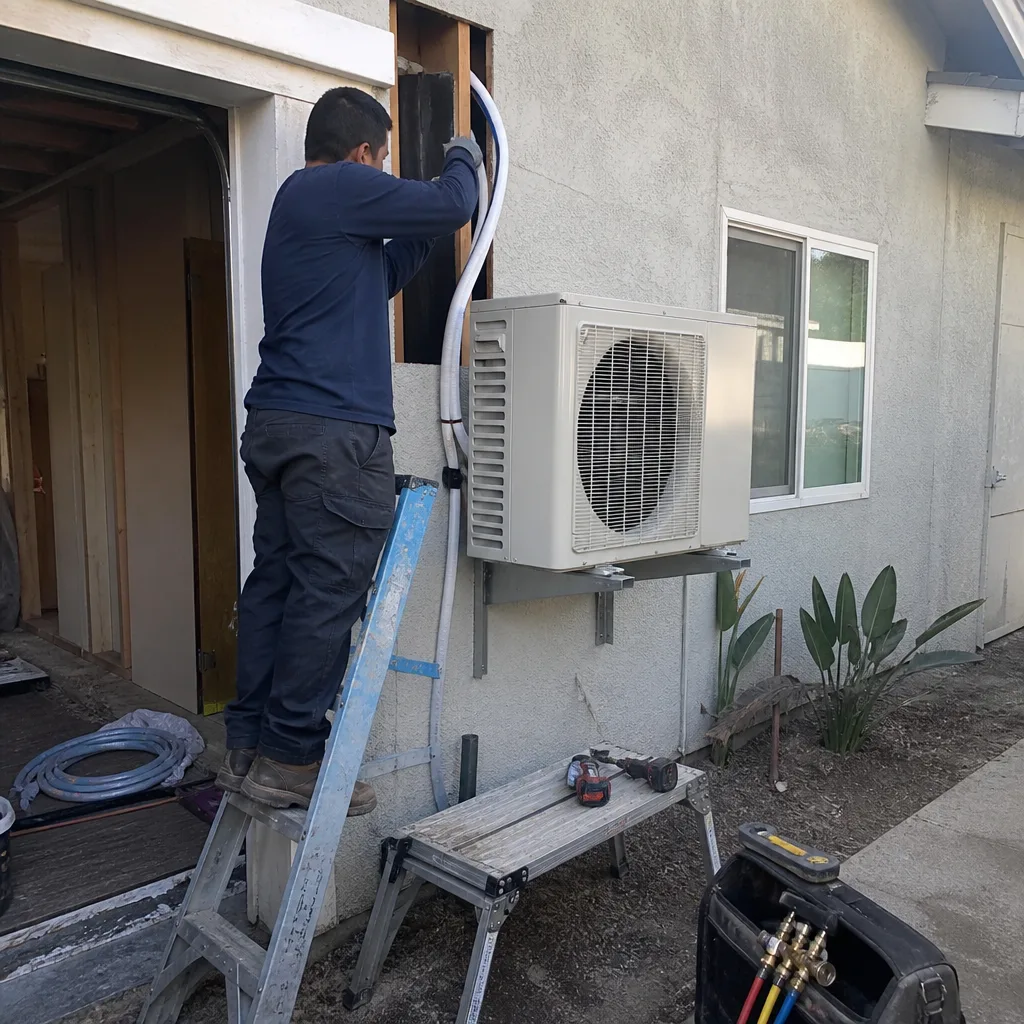
We’ve inspected and repaired ADUs in Van Nuys where deferred maintenance transformed $200 preventive actions into $5,000+ corrective work. The thermal and particulate environment here accelerates failure modes that coastal owners might ignore for years.
Real costs from our project files:
- Attic insulation settlement to R-15 equivalent: $1,800-$3,200 to remove, re-blow to proper depth, and restore attic access - versus $0 if caught and topped off early
- Mini-split compressor failure from dirty condenser: $2,500-$4,500 replacement - versus $15 in foaming cleaner and 30 minutes annually
- Cool-roof membrane failure from delayed recoat: $8,500-$14,000 full replacement on 600 sq ft - versus $1,200-$2,400 recoat at year 6
- Condensate line freeze and interior water damage: $1,200-$2,500 remediation - versus $40 trace heater
- Failed GFCI discovered during sale inspection: $150-$300 emergency electrician call - versus $0 if tested and replaced proactively
The pattern is consistent: materials are cheap, access is easy, and the consequences of delay are disproportionate. The Van Nuys climate doesn’t forgive deferred maintenance the way a coastal microclimate might.
Common Mistakes to Avoid
- Assuming “mild” climate means minimal maintenance. Van Nuys temperature swings - 40°F winter nights to 100°F summer days - stress materials more than steady coastal conditions. Thermal cycling cracks sealants, loosens fasteners, and degrades insulation binders faster than steady-state environments.
- Using standard-pressure washers on mini-split condensers. The aluminum fins require 40 PSI maximum; a standard pressure washer delivers 1,500-3,000 PSI. Bent fins reduce airflow, raise head pressure, and shorten compressor life. We’ve replaced condensers where the owner “cleaned” them into failure.
- Ignoring the Santa Ana season until the first wind event. Late August is the time to seal penetrations and clear defensible space, not October when dust is already inside and fire risk is elevated.
- Storing items in the attic of a garage conversion ADU. The original garage attic was not designed for storage load, and added weight compresses insulation. If you need storage, install a proper floor system above the insulation - a $1,500-$3,000 improvement that protects both your belongings and your thermal envelope.
- Replacing smoke alarms with identical 9V-battery models. California law now requires 10-year sealed units for replacements. Installing a non-compliant alarm creates liability and will be flagged in any sale inspection.
- Skipping the annual photo record. Without dated documentation, insurance claims after wind or fire events become “he said, she said” disputes. A 10-minute photo session annually eliminates this risk entirely.
When to Call a Professional
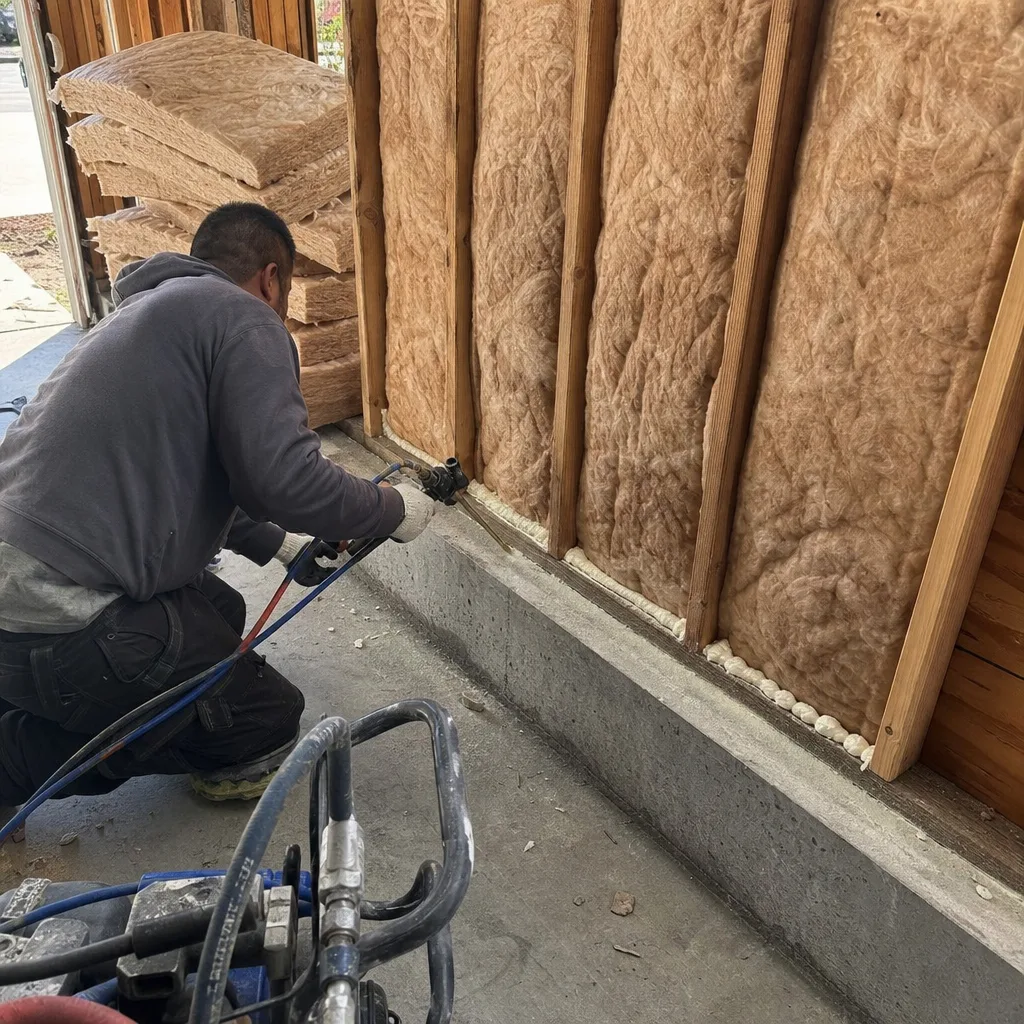
Some maintenance tasks require licensed trade expertise. Call a professional when you find: moisture staining on roof sheathing (indicates ventilation or exhaust failure), refrigerant leaks at the mini-split (indicated by oil staining on lines or reduced cooling capacity), electrical panel warmth or breaker tripping (potential arc-fault or overload condition), or any gas appliance malfunction (if your ADU includes a gas range or water heater).
For ADU owners considering whether their unit was built to current standards, or evaluating whether a maintenance finding indicates a design or construction defect, New Detached ADU in Van Nuys consultations include a free second opinion on any written estimate or inspection report already in hand. Ellery ADU Studio Van Nuys offers free estimates in Van Nuys - call (424) 523-8492.
Frequently Asked Questions
Materials and consumables for a complete annual cycle run $150-$300; professional inspection and service of HVAC, roofing, and electrical systems adds $400-$800 if you hire each trade separately. A single-contract maintenance visit from a design-build studio familiar with your unit’s construction can reduce this. Call (424) 523-8492 for an exact quote - estimates are free.
Under The Haven Standard, Clause 1, every project is quoted with a written price before any work begins. The scope is locked at signing; no door-side upsells, no scope creep. This applies to maintenance visits as well as new construction.
Routine maintenance - filter changes, weatherstripping replacement, caulking, cleaning - requires no permit. Work that alters structural, electrical, plumbing, or mechanical systems may require permit and inspection. In Van Nuys, located within Los Angeles city limits, permit requirements track the Los Angeles Building Code. If you’re unsure whether a specific repair needs permitting, we provide documentation of permit status as part of our ADU Design & Permitting in Van Nuys service.
A thorough inspection of a 400-800 sq ft ADU, including photo documentation and written report, takes 2-3 hours. HVAC service adds 1 hour. We schedule these as single visits to minimize disruption.
Buyers and their inspectors want: original permit and final inspection documents, proof of occupancy compliance, annual maintenance records with photos, and documentation of any warranty claims or repairs. A complete file accelerates sale and supports your asking price. The single-page annual record described in this guide, combined with the documentation Ellery provides at project closeout, satisfies this requirement.
We inspect and service ADUs from any builder, with particular expertise in prefab and modular systems from Abodu, Cover, Tuff Shed, and other manufacturers we specify. Our 365-Day Done Right Promise applies to work we perform; we cannot warranty another builder’s construction, but we can document its condition and recommend corrective actions with written pricing.
The Bottom Line
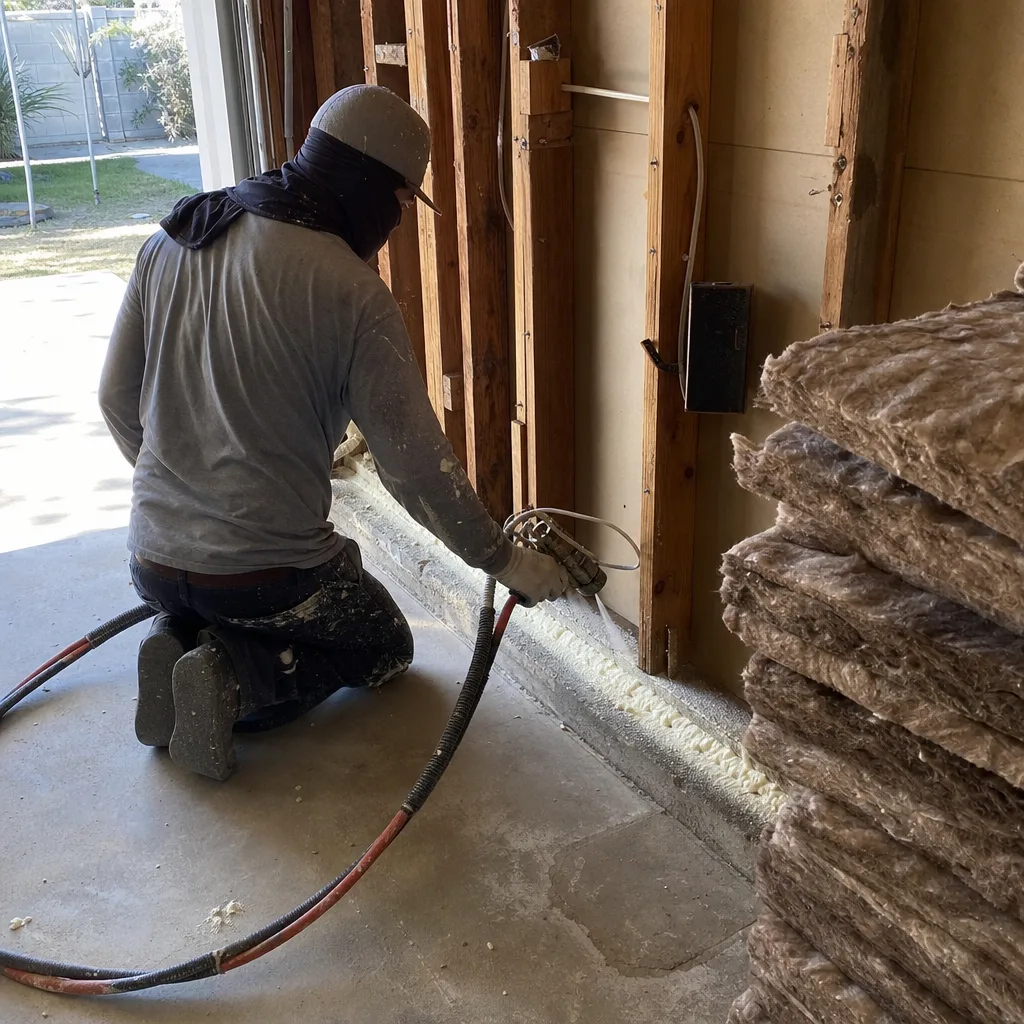
Van Nuys ADU maintenance is not about dramatic interventions. It’s about recognizing that this Valley microclimate - the thermal basin, the Santa Ana particulate, the temperature swings - accelerates wear on systems designed for milder conditions. A disciplined April and November routine, a monthly test habit, and a single page of annual documentation costs less than one emergency service call and protects the value of an asset that, for most owners, represents six figures of invested capital. The ADU owners we’ve worked with since 2015 who maintain this discipline have fewer surprises, lower lifetime costs, and cleaner sales when they transfer the property. Explore more guides & resources for year-round ADU care.
Call (424) 523-8492 to schedule your free estimate or second opinion on any written estimate already in hand. A live person answers calls 24/7.
Written by Nadia Ellery, Owner at Ellery ADU Studio Van Nuys, serving Van Nuys since 2015.